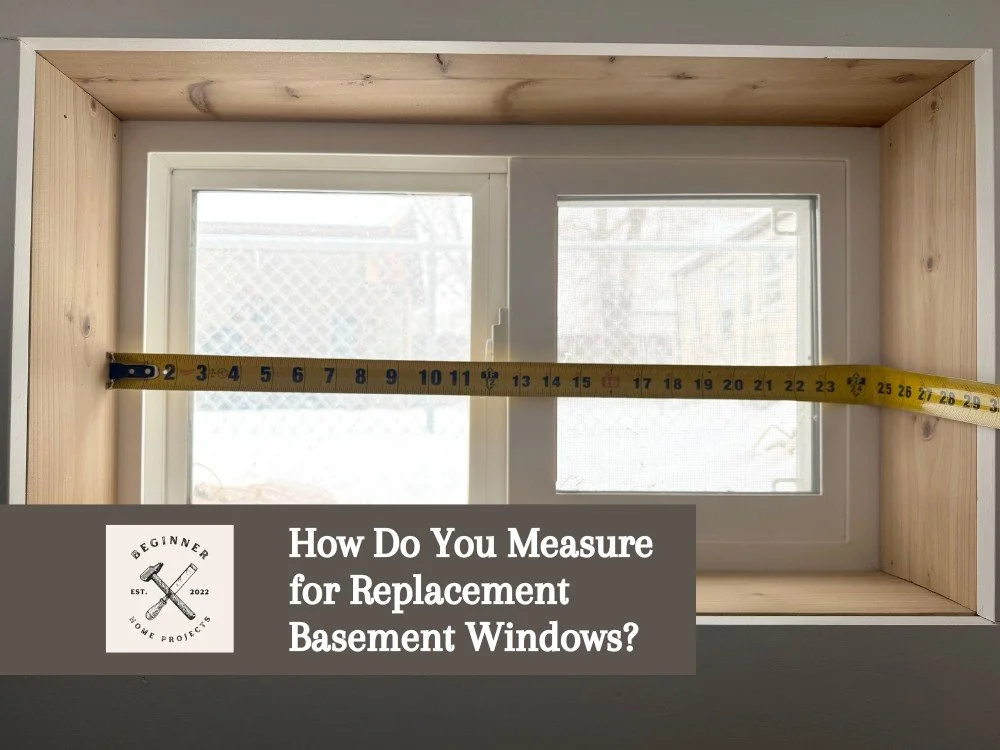
How Do You Measure for Replacement Basement Windows?
By Sean, DIY enthusiast & master of sarcasm. Last updated February 20, 2026.
This post contains affiliate links. As an Amazon Associate, I earn from qualifying purchases at no additional cost to you. Thank you!
TL;DR: To measure for replacement basement windows, measure the rough opening, not the old window, and record width and height in three places, then use the smallest numbers. Measure the opening depth, check for square using diagonal measurements, and subtract about 1/4 inch from width and height for installation clearance. Confirm window well sizing and local egress requirements before ordering. Accurate measurements prevent delays, reorders, and sealing problems.
Measuring basement windows requires patience and precision. A small measuring mistake can turn a simple replacement project into a costly custom order. If you want your new window to fit correctly the first time, you need to follow the same process the pros use, which involves a lot of measuring, but doesn’t require any heavy contracting skills.
Table of Contents:
Start by Identifying What You’re Measuring
Get the Necessary Tools
Remove Interior Trim If Needed
Measure the Width in Three Places
Measure the Height in Three Places
Measure the Depth of the Opening
Check if the Opening is Square
Subtract for Installation Clearance
Measure the Window Well (If One Exists)
Double-Check Egress Requirements
Common Measuring Mistakes to Avoid
How to Install a Window in a Basement
Final Tip From an Experienced DIYer
Start by Identifying What You’re Measuring
Before you begin, check the type of replacement window you plan to install. Most basement window replacements use insert or pocket-style windows that fit inside the existing opening. That means you must measure the rough opening, not the old window frame. In my case, I replaced my basement window with a double-pane sliding window from Jeld-Wen.
This step is the foundation of understanding how to measure for replacement basement windows correctly. Measuring the removable frame instead of the structural opening is one of the most common mistakes people make when replacing windows.
Get the Necessary Tools
Remove Interior Trim If Needed
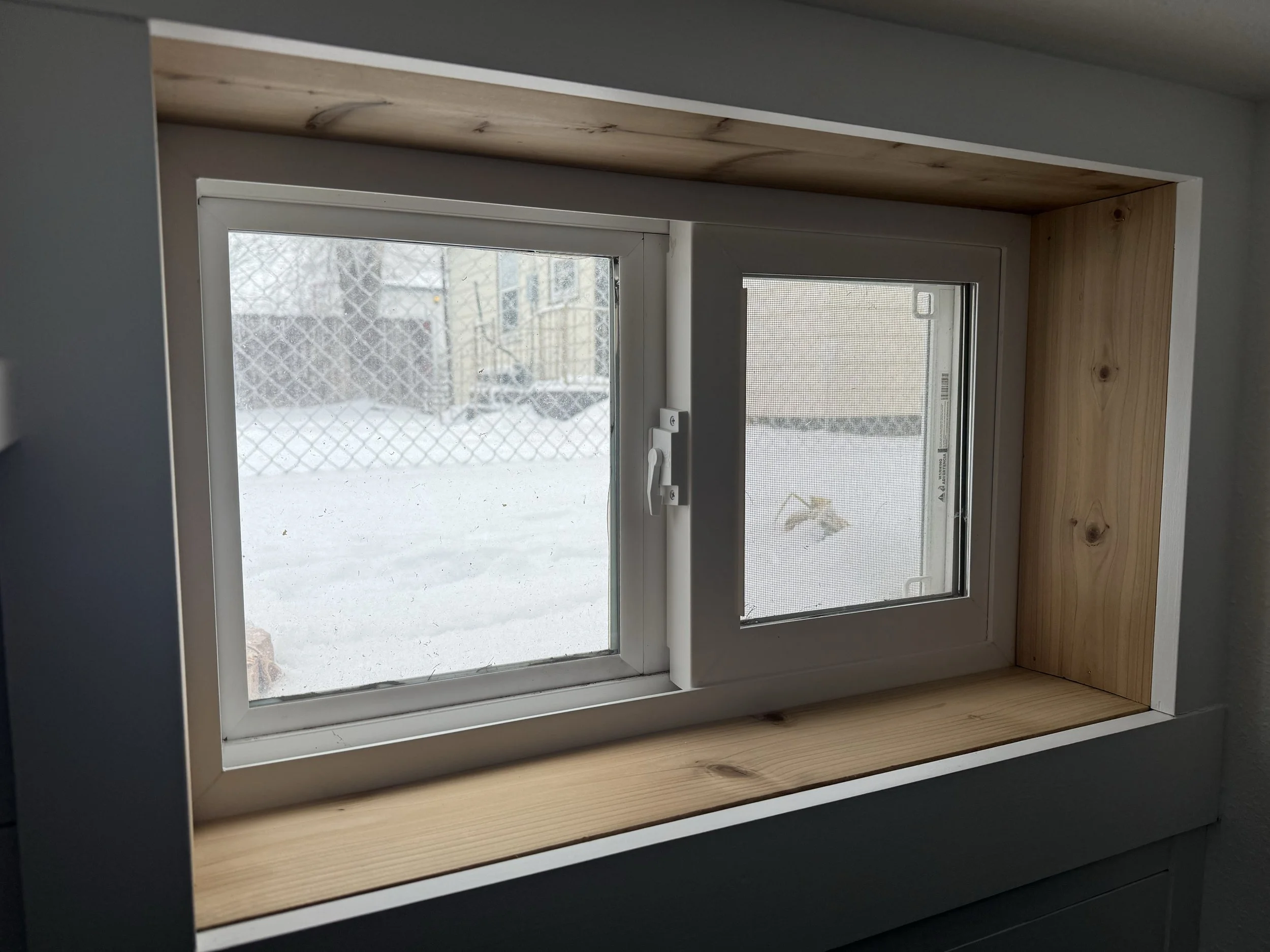
The interior trim around a basement window, as shown above, must be removed to get an accurate measurement for a replacement window.
Interior trim often hides the real size of the opening. Carefully remove any trim that sits tight against the window frame so you can measure from structural surface to structural surface.
This step is especially important in older homes where previous installations may have reduced the visible opening size. This was the case when I replaced my basement window. The interior trim had to be removed first so that I could get an accurate measurement. I was demoing the entire room where the window is anyway, so it was just part of the larger process of updating that space.
Measure the Width in Three Places
Use a steel tape measure and record the width in three locations:
Top
Middle
Bottom
Always write down all three numbers and use the smallest measurement as your final width. Basement walls can shift slightly over time due to settling and soil pressure, so openings are rarely perfectly straight.
Using the smallest measurement ensures the new window will fit into the tightest portion of the opening. In some homes, your measurements might be off significantly, especially if it’s an older home that has settled over the years.
Measure the Height in Three Places
Next, measure the height on the:
Left side
Center
Right side
Record each number and use the smallest measurement as the final height. This prevents forcing the window into the opening and helps ensure proper sealing and space for insulation.
Measure the Depth of the Opening
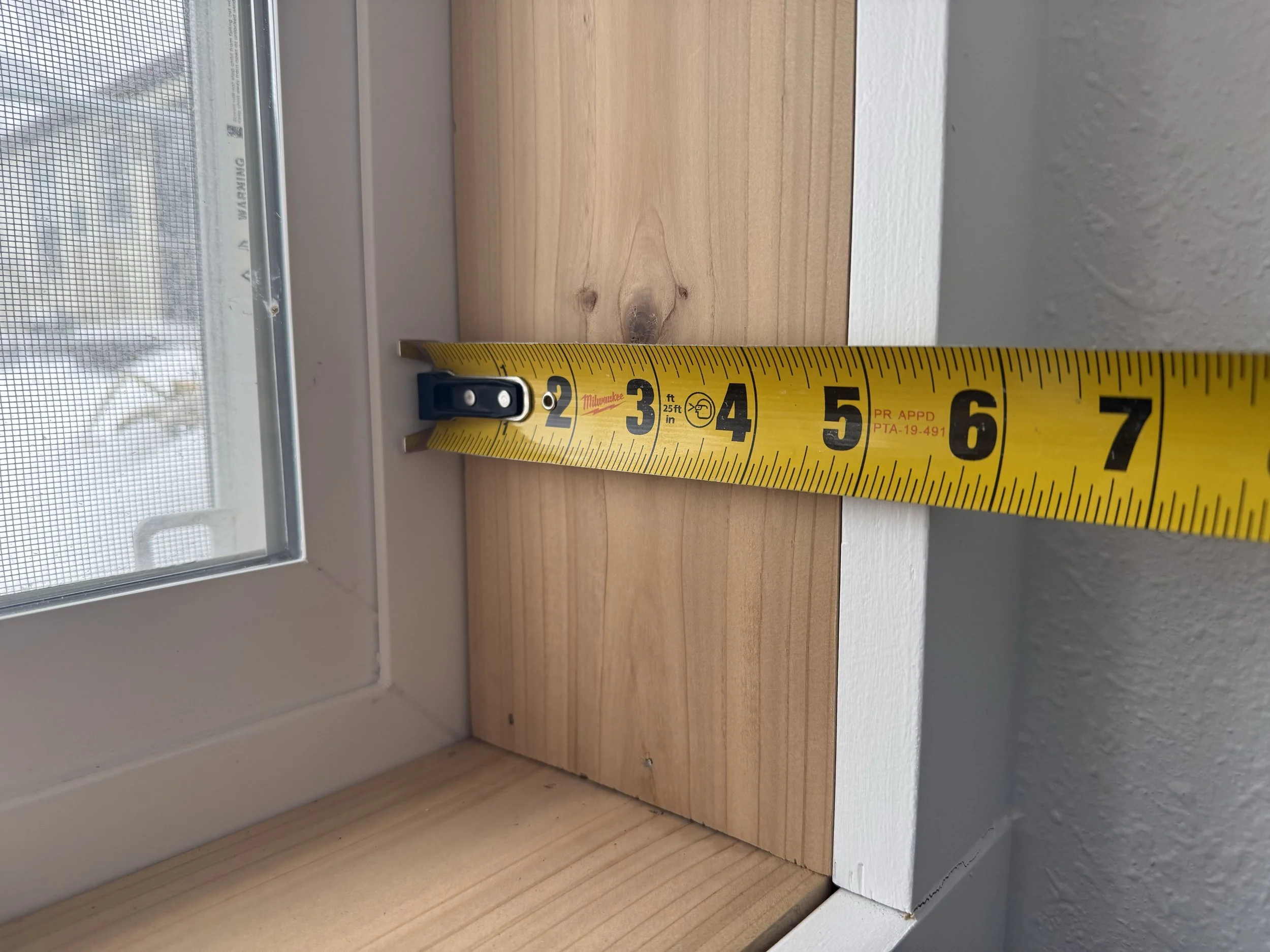
Basement windows typically sit inside concrete or block foundations (my window replacement was in an opening in the house’s concrete foundation). Measure from the interior edge of the opening to the exterior edge.
Depth measurements help confirm the correct window style and installation method. Skipping this step can lead to alignment issues and sealing problems later.
In my case, I ordered the window about 1/4 of an inch small in height and width, so that I had 1/8 of an inch of space around the window to shim, and later on, add spray foam insulation to seal off the opening.
Check If the Opening is Square
New windows are manufactured square, but basement openings often are not. To check:
Measure diagonally from top-left to bottom-right.
Measure from top-right to bottom-left.
If the numbers differ, the opening is slightly out of square. This is normal, and you can correct it using shims during installation.
Subtract for Installation Clearance
Never order windows at the exact opening size. A small clearance gap allows for shimming and insulation. To get the proper gap, do the following:
Subtract about 1/4 inch from the final width.
Subtract about 1/4 inch from the final height.
This gap allows the window to slide into place and be properly sealed against moisture and air leaks.
Measure the Window Well If One Exists
If your basement window sits in a window well, measure the well’s width and projection from the wall. The replacement window must fit inside the well and allow proper drainage and opening clearance.
Fortunately, my basement window didn’t have a well, so I didn’t need to worry about this step. Your situation
Double-Check Egress Requirements
If the basement is used as a bedroom or living space, building codes often require an egress window for emergency escape.
Typical guidelines include:
Minimum opening width of 20 inches
Minimum opening height of 24 inches
Minimum net clear opening of 5.7 square feet
Maximum sill height of 44 inches from the floor
Always verify local code requirements before ordering, otherwise you could have a very expensive window you can’t use. In my basement window replacement, this wasn’t an issue as it’s a non-egress window. Still, measuring correctly was critical as the opening in the foundation wasn’t a common size, so I had to order a custom window.
Common Measuring Mistakes to Avoid
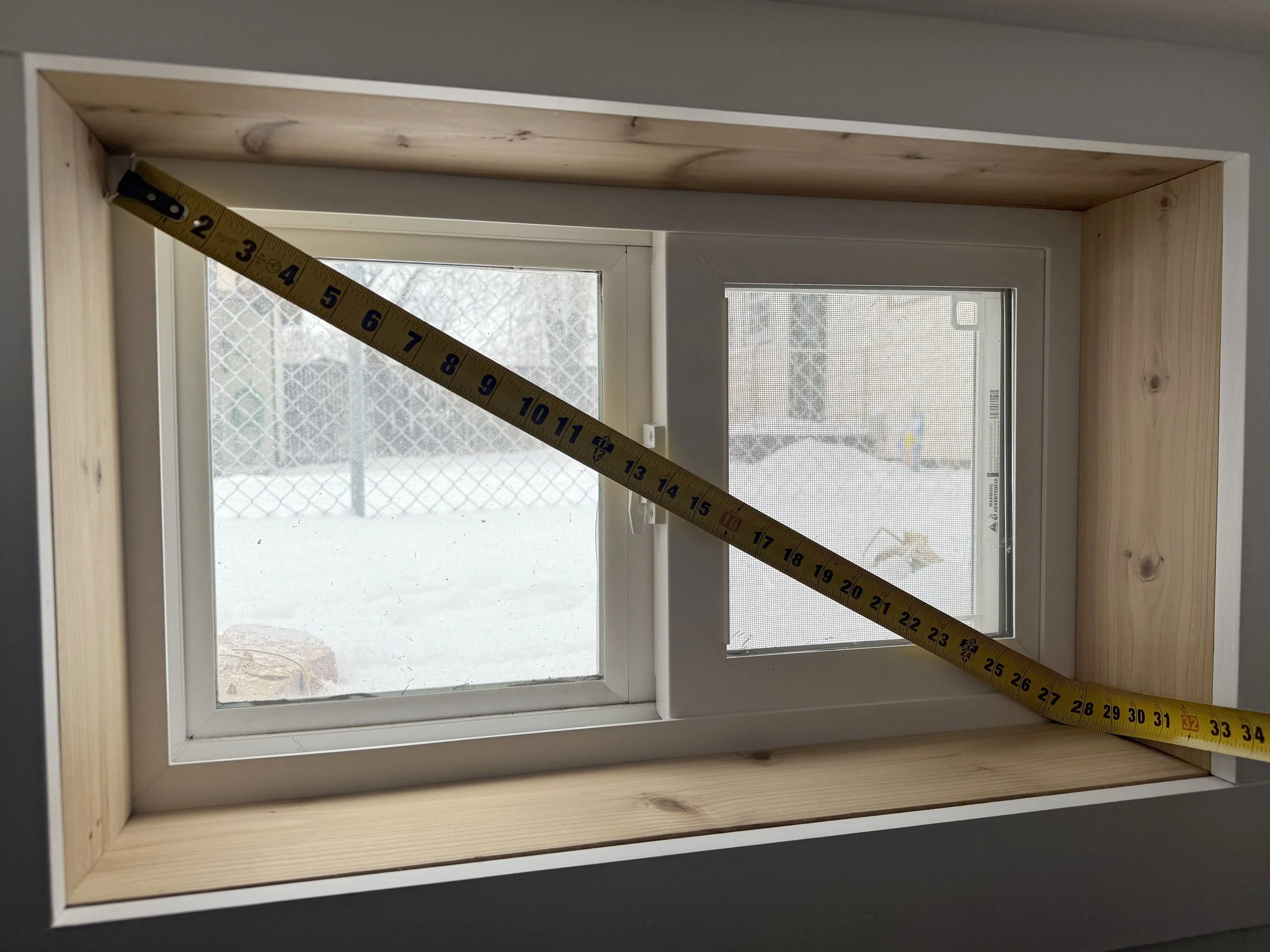
Replacing a basement window requires careful measurement not just of the window opening, but also square of the existing opening.
Avoid these frequent errors when learning how to measure for replacement basement windows:
Measuring the old window instead of the rough opening
Rounding measurements instead of recording exact numbers
Using the largest measurement instead of the smallest
Forgetting to subtract installation clearance
Skipping the depth measurement
Accurate measurements reduce delays and prevent costly reorders.
How to Install a Window in a Basement
After measuring and ordering the correct size, installation becomes the next step. Basement window installation typically involves removing the old unit, cleaning the opening, placing the new window, and securing it with shims and fasteners. You can see how I did all of these steps in my how-to guide for replacing a basement window.
The perimeter is sealed with insulation and waterproof caulk to prevent air and moisture intrusion. If the window must meet egress requirements, the opening may need structural modifications and proper drainage around the window well.
Final Tip From an Experienced DIYer
Measure twice and document everything. Take photos from inside and outside the home and keep your measurements organized.
When you follow the correct process for measuring for replacement basement windows, you reduce installation time, prevent ordering mistakes, and ensure your new window performs properly for years.
I actually had a lot of fun replacing the window in my basement. Sure, it’s a lot of work, some of which is tedious, but the end result is a better-looking, more energy-efficient window. What’s not to like about that?!
FAQ: Measuring for Replacement Basement Windows
-
Measure the rough opening, not the existing window. Record width and height in three places, use the smallest numbers, measure depth, check square, and subtract about 1/4 inch for installation clearance.
-
Always measure the rough opening. The old window frame can hide the true structural size and lead to ordering the wrong window. Trim can cover part of the opening. Removing it lets you measure from structural surface to structural surface for accurate results.
-
Basement walls can shift over time. Measuring top, middle, and bottom for width and left, center, and right for height helps you find the tightest part of the opening.
-
Subtract about 1/4 inch from the final width and height. This gap allows room for shims, insulation, and proper sealing.
-
Yes, many homeowners complete this project. Installation usually involves removing the old window, cleaning the opening, shimming the new window, fastening it, and sealing the perimeter.